

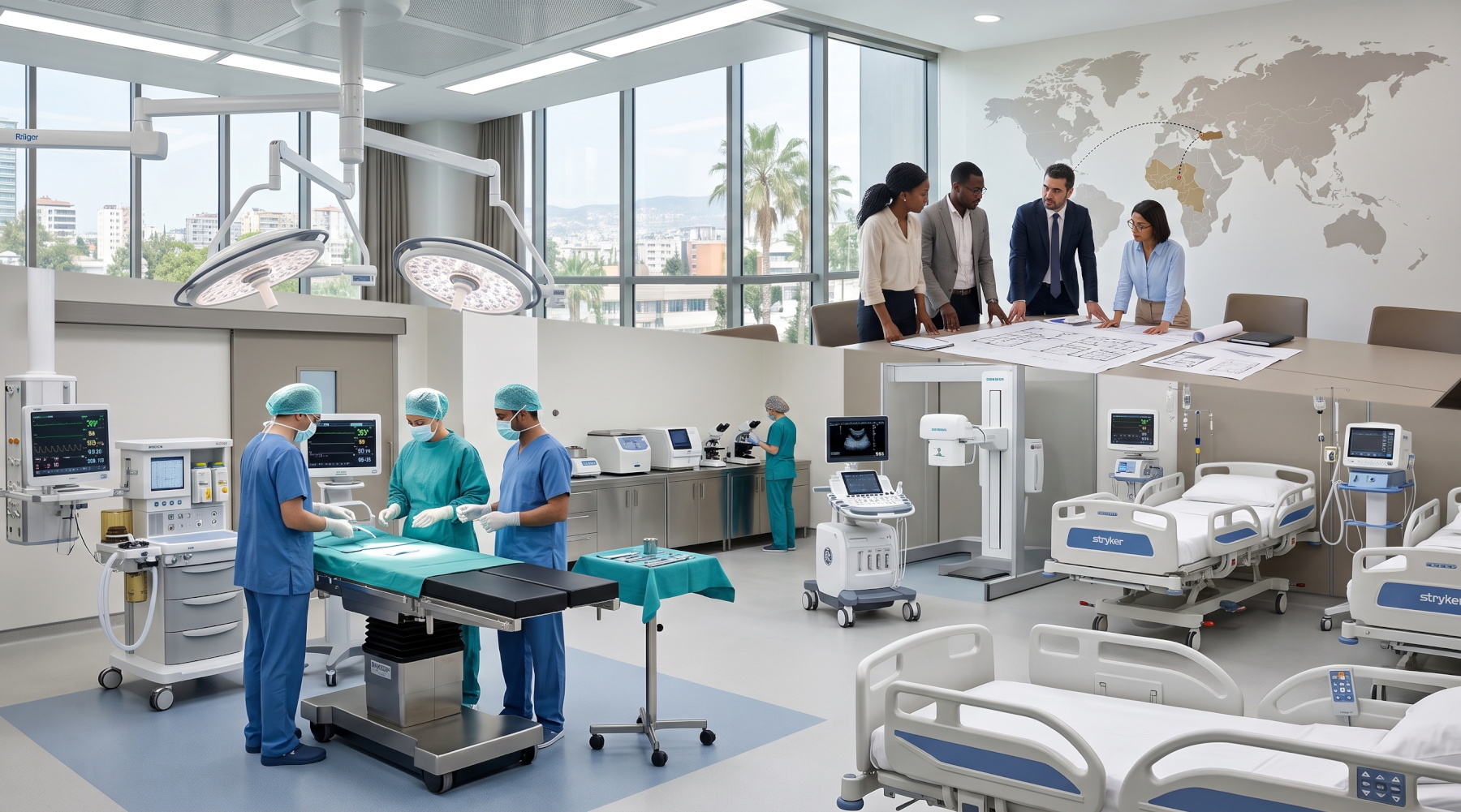
Building a hospital is far more complex than purchasing medical equipment and placing it inside a building. A successful healthcare project requires detailed planning, needs assessment, medical equipment selection, logistics, installation, staff training, technical support and long-term maintenance.
For healthcare investors, government institutions, private hospital groups and healthcare organizations across Africa, choosing the right partner for a turnkey hospital setup in Africa can make a significant difference in project cost, timeline, operational efficiency and long-term sustainability.
A turnkey hospital project brings multiple stages together under a coordinated structure. Instead of working separately with different suppliers for medical devices, hospital departments, logistics, installation and technical service, the project can be managed through an integrated approach.
For African healthcare projects, Turkey has become an increasingly important sourcing and project-support destination because of its manufacturing capabilities, technical expertise, geographical position and competitive procurement environment.
As a Turkey-based medical equipment and healthcare solutions company, MAK MEDIKAL provides medical equipment supply, hospital setup solutions, technical services and project support for healthcare projects in Africa and international markets.
This guide explains how a turnkey hospital project can be planned, what equipment is required, how budgets can be approached for 25-, 50- and 100-bed hospitals, and what investors should consider before starting a hospital project in Africa.
A turnkey hospital setup is an integrated project approach in which the healthcare facility's medical equipment, departmental requirements, procurement and implementation processes are planned and coordinated as part of a single project.
The exact scope of a turnkey hospital project can vary depending on the investor, hospital size, country, medical specialties and construction status.
A project may include:
Hospital needs assessment
Medical department planning
Medical equipment lists
Equipment specification
Supplier selection
Procurement
New and refurbished medical equipment
Medical consumables
Laboratory equipment
Operating room equipment
Intensive care equipment
Imaging equipment
Patient monitoring systems
Hospital furniture and accessories
International logistics
Equipment installation
Commissioning
Staff training
Biomedical technical support
Preventive maintenance
Spare parts planning
After-sales service
The objective is to create a coordinated process in which the hospital can move from procurement and installation toward operational readiness.
This approach can be particularly valuable in Africa, where international equipment procurement may involve multiple suppliers, international shipping, customs procedures, technical installation and local service requirements.
Healthcare infrastructure is expanding across many African countries. New private hospitals, clinics, diagnostic centers, laboratories and specialized healthcare facilities are being developed to meet increasing demand.
However, healthcare projects can become unnecessarily expensive when equipment procurement is handled without an overall plan.
For example, purchasing an imaging system without considering electrical infrastructure, room requirements, installation access, software compatibility, radiation protection or future maintenance can create additional costs later.
Similarly, selecting operating room equipment individually without considering the complete surgical workflow can result in incompatible or unnecessary equipment.
A turnkey approach addresses these issues before procurement begins.
Instead of asking:
“Which medical devices should we buy?”
the project should begin with:
“What type of healthcare facility are we building, which departments will operate, which medical services will be provided, and what equipment is required for each department?”
This change in perspective can significantly improve project planning.
The first stage of a successful turnkey hospital setup is needs analysis.
Before preparing a medical equipment quotation, the project team should understand the hospital itself.
Important questions include:
How many beds will the hospital have?
Is it a general hospital or specialized facility?
Which medical departments will operate?
What surgeries will be performed?
Will the hospital include intensive care?
Will there be an emergency department?
Will diagnostic imaging be available?
Will the hospital have a laboratory?
What level of maternity and neonatal care is planned?
Will the hospital provide outpatient services?
What patient volume is expected?
What medical specialties will be introduced in the future?
What is the available building infrastructure?
What are the country's regulatory requirements?
The answers determine the equipment list.
A 25-bed private clinic, a 50-bed general hospital and a 100-bed multidisciplinary hospital may all require completely different equipment configurations.
Therefore, hospital bed count alone should never be used to create a final equipment list.
After the hospital's requirements are established, equipment planning should be performed department by department.
A professional medical equipment list can be divided into different hospital units.
A typical emergency department may require:
Patient monitors
Defibrillators
ECG machines
Emergency stretchers
Examination tables
Infusion pumps
Syringe pumps
Suction devices
Oxygen systems
Emergency carts
Portable ultrasound
Ventilators
Examination lights
The exact list depends on the hospital's emergency care capacity.
An ICU requires carefully coordinated equipment.
Typical equipment may include:
ICU patient monitors
Ventilators
Infusion pumps
Syringe pumps
Defibrillators
ICU beds
Central monitoring systems
Suction systems
ECG equipment
Portable diagnostic devices
Blood gas analyzers
The number and specifications depend on the number of ICU beds and the level of critical care provided.
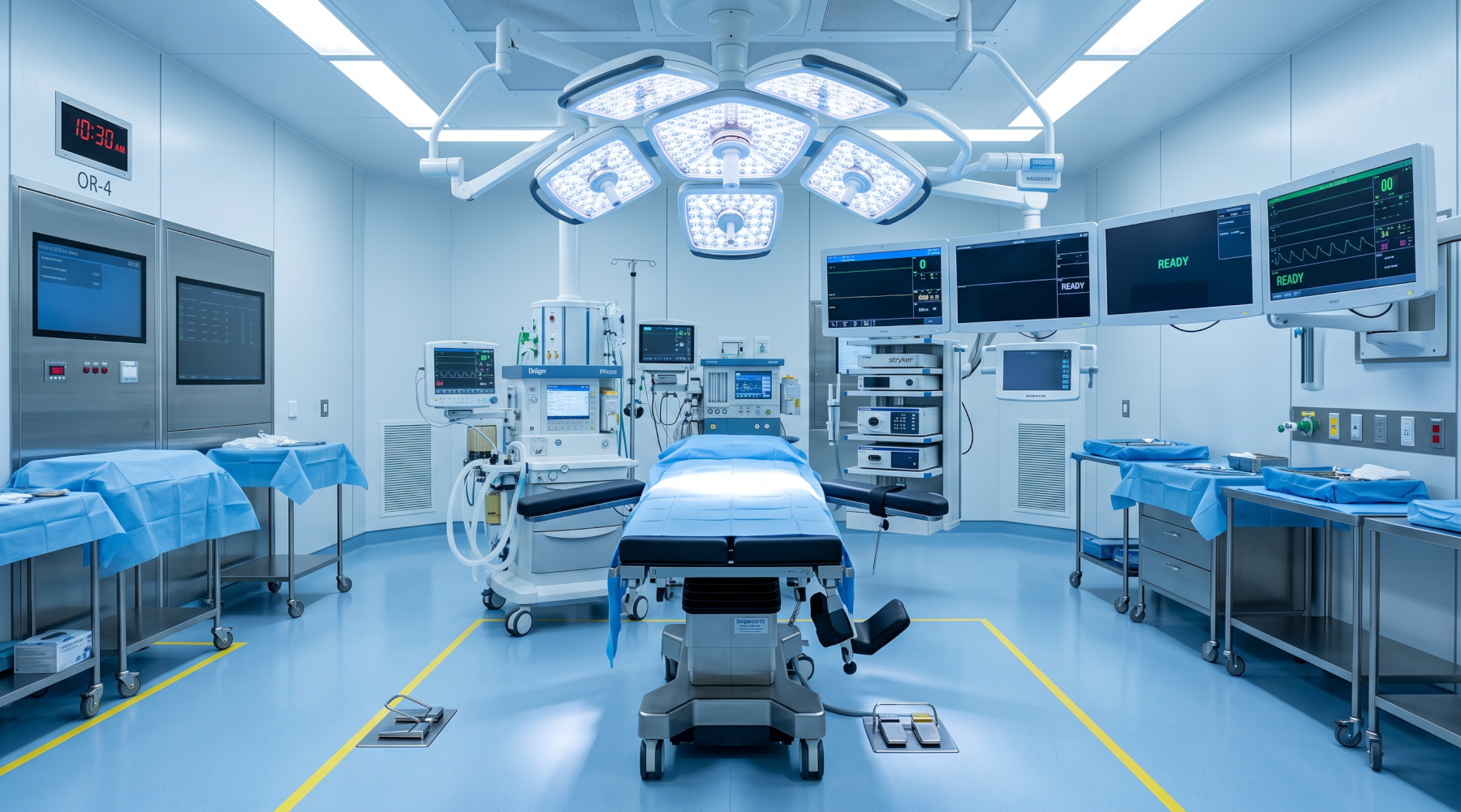
Operating rooms are among the most equipment-intensive areas of a hospital.
A project may require:
Operating tables
Surgical lights
Anesthesia machines
Patient monitors
Electrosurgical units
Surgical suction systems
Surgical instruments
Medical gas systems
Operating room accessories
Defibrillators
Patient warming systems
Endoscopy equipment
Surgical imaging equipment
The operating room equipment list should be designed according to the surgical specialties that the hospital intends to provide.
An orthopedic hospital, for example, may require a different configuration from a general hospital or a hospital specializing in obstetrics and gynecology.
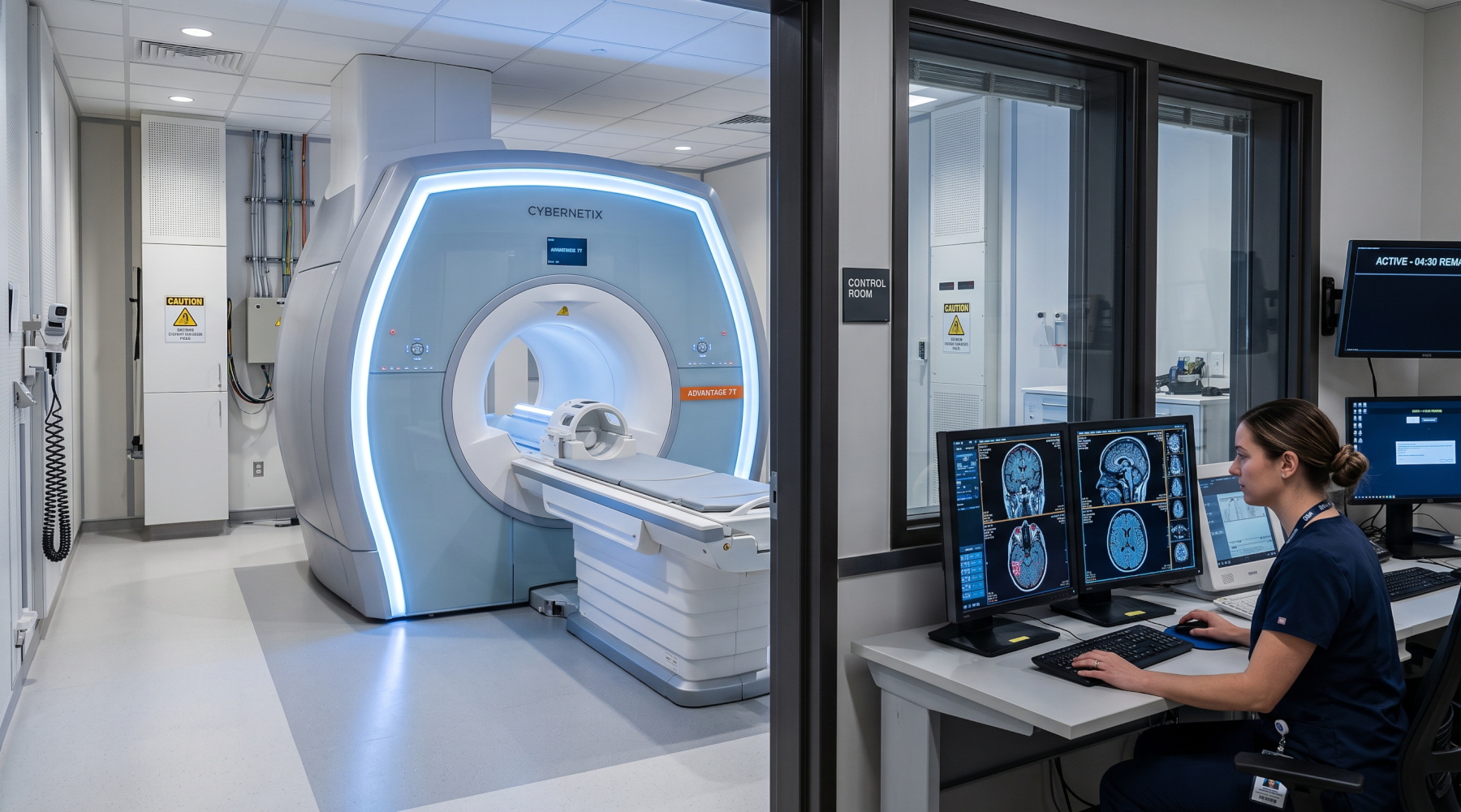
Depending on the hospital's scope, imaging services may include:
Digital X-ray systems
Mobile X-ray systems
Ultrasound systems
CT scanners
MRI systems
Mammography systems
C-arm systems
PACS and imaging software
Imaging equipment requires special attention during planning.
Room dimensions, electrical infrastructure, cooling, radiation protection, installation access, software, networking and technical service requirements should be evaluated before purchasing equipment.
A hospital laboratory may require equipment such as:
Hematology analyzers
Biochemistry analyzers
Immunoassay systems
Electrolyte analyzers
Coagulation analyzers
Microscopes
Centrifuges
Laboratory refrigerators
Incubators
Autoclaves
Laboratory workstations
Sample preparation equipment
The final configuration depends on the tests that will be performed in-house.
A maternity department may require:
Delivery beds
Fetal monitors
Infant warmers
Neonatal incubators
Phototherapy units
Baby scales
Suction systems
Patient monitors
Ultrasound systems
Resuscitation equipment
Again, equipment selection should reflect the hospital's planned clinical services.
Once departments have been identified, the next stage is preparing a detailed medical equipment list.
A professional equipment list should ideally contain more than just product names.
Important information may include:
| Information | Purpose |
|---|---|
| Department | Identifies where the equipment will be used |
| Equipment type | Defines the required device |
| Quantity | Determines procurement volume |
| Technical specification | Establishes performance requirements |
| New/refurbished status | Defines equipment condition |
| Manufacturer | Identifies the proposed brand |
| Model | Defines the equipment configuration |
| Warranty | Establishes coverage |
| Installation requirement | Determines implementation needs |
| Training | Defines staff training requirements |
| Spare parts | Supports long-term operation |
| Estimated price | Supports budget planning |
This structure allows hospital investors to compare different suppliers more effectively.
It also reduces the risk of purchasing equipment that does not meet the hospital's actual requirements.
Not every hospital project needs to use exclusively new equipment.
Depending on the project budget, clinical requirements and local regulations, a combination of new and professionally refurbished medical equipment may be considered.
Refurbished equipment can be particularly useful for certain categories where the cost of new equipment is high.
However, refurbished does not simply mean “used.”
Professional refurbishment should involve technical inspection, servicing, testing and verification of the equipment's operational condition.
Depending on the equipment type, buyers should evaluate:
Maintenance history
Operating hours
Previous service records
Technical condition
Software version
Accessories
Calibration
Safety testing
Replacement parts
Warranty
Availability of technical support
For a turnkey hospital project, equipment condition should always be considered alongside clinical importance.
Critical systems should receive particularly careful technical evaluation.
Once the equipment list has been finalized, procurement can begin.
A hospital project may involve dozens or even hundreds of individual medical products.
Selecting suppliers solely according to the lowest initial price can create problems later.
A supplier evaluation should consider:
Product quality
Technical specifications
Equipment condition
Manufacturer reputation
Documentation
Warranty
Technical service
Spare parts availability
Installation support
Training
Delivery time
Export experience
Logistics capabilities
Total cost of ownership
The cheapest quotation is not necessarily the cheapest solution over the lifetime of the equipment.
A device that requires frequent repairs or has limited spare-part availability may become significantly more expensive over several years.
International logistics is another major component of a turnkey hospital setup in Africa.
When medical equipment is sourced from Turkey, project planning should consider:
Equipment packaging
Export documentation
Shipping method
Cargo dimensions
Insurance
Customs procedures
Destination country requirements
Delivery location
Installation schedule
Site readiness
Turkey's geographical location provides an important logistical advantage for projects serving Europe, the Middle East and Africa.
For African healthcare investors, sourcing from Turkey can provide access to a broad medical equipment market while also allowing project teams to coordinate procurement and international transportation.
The logistics plan should be prepared before equipment is dispatched.
A hospital site must be ready to receive the equipment, and installation requirements should be coordinated with the delivery schedule.
Delivering medical equipment to a hospital is only one part of the project.
The equipment must then be installed, configured and commissioned.
Depending on the device, this may involve:
Physical installation
Electrical connections
Network configuration
Software installation
Functional testing
Calibration
Safety checks
System integration
User acceptance testing
Staff orientation
For complex equipment such as imaging systems, laboratory analyzers, anesthesia machines and operating room equipment, professional installation is particularly important.
The installation process should be coordinated with the hospital's construction and infrastructure teams.
A hospital cannot operate effectively simply because the equipment has been installed.
Healthcare professionals and technical staff need to understand how to use the equipment safely and effectively.
Training can include:
Basic operation
Clinical use
Safety procedures
Cleaning and routine care
Troubleshooting
Preventive maintenance
Emergency procedures
Software operation
Equipment-specific protocols
For a turnkey hospital project, training should be considered during the planning stage rather than added at the end.
Long-term technical support is one of the most important elements of hospital equipment procurement.
Medical equipment is a long-term investment.
Hospitals need reliable access to:
Preventive maintenance
Corrective maintenance
Spare parts
Technical assistance
Equipment inspection
Calibration
Troubleshooting
Software support
Periodic servicing
A supplier that disappears after delivery can create significant operational risks.
This is why investors should evaluate the supplier's technical service capabilities before signing the procurement agreement.
A 25-bed facility may be designed as a private clinic, community hospital, specialized healthcare center or smaller general hospital.
The exact requirements depend on the medical services provided.
A possible structure may include:
Emergency or outpatient services
General patient rooms
Minor procedure or operating room
Laboratory
Ultrasound
Basic X-ray
Pharmacy
Maternity services
Small intensive care or observation area
For a project of this size, equipment procurement should focus on essential clinical services.
The objective is not to purchase every possible medical device.
Instead, the project should prioritize equipment that supports the hospital's core services and expected patient volume.
Rather than assigning a universal fixed price, a better approach is to divide the budget into categories.
For example:
1. Core medical equipment
Diagnostic, patient monitoring, emergency and treatment equipment.
2. Surgical and procedural equipment
Operating room and procedure-related systems.
3. Laboratory
Essential diagnostic laboratory equipment.
4. Imaging
X-ray, ultrasound and other imaging systems according to the clinical scope.
5. Hospital furniture
Beds, examination furniture and supporting equipment.
6. Logistics
Packaging, international shipping, insurance and destination logistics.
7. Installation
Technical installation and commissioning.
8. Training
User and technical staff training.
9. Technical support
Maintenance and spare parts planning.
This approach creates a more realistic project budget than simply calculating a price per hospital bed.
A 50-bed hospital generally allows for a broader range of medical services.
Depending on the project concept, it may include:
Emergency department
Outpatient clinics
Operating rooms
Intensive care
Maternity
Neonatal care
Radiology
Laboratory
Pharmacy
Inpatient departments
Recovery areas
Administration
A 50-bed project may therefore require a significantly broader equipment portfolio.
For example, the imaging department may include multiple systems, while the laboratory can support a wider range of diagnostic tests.
The operating department may also require multiple operating tables, anesthesia systems, surgical lights and monitoring equipment.
The project budget should be divided according to clinical departments rather than simply applying a fixed amount to each bed.
A practical planning model can include:
Emergency equipment
ICU equipment
Operating room equipment
Imaging equipment
Laboratory equipment
Maternity and neonatal equipment
Patient room equipment
Hospital furniture
Medical consumables
IT and connectivity requirements
Installation
Training
Logistics
Technical service
The final cost depends heavily on the equipment brands, technology level, number of departments, new versus refurbished equipment and the hospital's clinical scope.
A 100-bed hospital represents a considerably larger healthcare investment.
It may operate as a multidisciplinary hospital with several specialized departments.
A project of this size may require:
Multiple operating rooms
Emergency department
ICU
Neonatal intensive care
Maternity
Radiology
Laboratory
Cardiology
Endoscopy
Outpatient clinics
Inpatient departments
Pharmacy
Sterilization
Medical gas systems
Central monitoring
Hospital information technology infrastructure
At this level, project coordination becomes increasingly important.
A 100-bed hospital may involve a large number of equipment categories and suppliers.
Without centralized planning, procurement can become fragmented.
For a 100-bed project, the budget should be developed as a detailed project model.
Major cost groups may include:
Medical imaging
Operating rooms
Intensive care
Emergency department
Laboratory
Maternity and neonatal care
Patient monitoring
Hospital beds and furniture
Sterilization
Medical consumables
Logistics
Installation
Training
Technical service
Spare parts
Software and integration
The final investment can vary dramatically depending on whether the project requires basic, mid-range or advanced medical technology.
Therefore, a serious hospital investment should receive a project-specific quotation rather than relying on generic online “cost per bed” estimates.
Turkey has developed a substantial healthcare, medical equipment and manufacturing ecosystem.
For African healthcare investors, Turkey can offer several potential advantages.
Turkey can provide access to a broad range of medical equipment and healthcare products at different price levels.
This allows projects to evaluate solutions according to their budget and clinical requirements.
Turkey's location between Europe, Asia and Africa makes it a practical sourcing point for international healthcare projects.
Turkey has established capabilities across healthcare manufacturing, medical technologies, hospital equipment and technical services.
This can support projects that require both equipment procurement and technical coordination.
For projects operating under budget constraints, professionally refurbished equipment can be evaluated for suitable applications.
This can allow investors to allocate more of the available budget to critical departments while maintaining appropriate equipment standards.
Instead of purchasing individual devices from unrelated suppliers, an experienced medical equipment partner can help coordinate a wider equipment portfolio.
This is especially useful for hospitals requiring multiple departments.
For an African healthcare project, the right partner should understand both medical equipment and international project requirements.
MAK MEDIKAL provides medical equipment solutions from Turkey for international healthcare projects, including African markets.
Our approach can cover different stages of the project, from equipment planning and procurement to logistics, installation and technical support.
Depending on project requirements, MAK MEDIKAL can support:
Medical equipment procurement
New medical equipment
Refurbished medical equipment
Hospital department equipment
Laboratory equipment
Imaging equipment
Operating room equipment
ICU equipment
Emergency equipment
Medical consumables
Hospital setup planning
Installation support
Equipment training
Biomedical technical service
Maintenance and after-sales support
The objective is to help healthcare investors build a practical equipment strategy rather than simply sell individual medical devices.
For more information about integrated hospital projects, visit the Turnkey Hospital Solutions section of MAK MEDIKAL.
A well-structured project can follow a sequence such as:
1. Initial Consultation
The investor explains the hospital concept, location, capacity and target medical services.
↓
2. Needs Assessment
The project team analyzes the hospital's departments, patient capacity and clinical requirements.
↓
3. Department Planning
Each department is evaluated separately.
↓
4. Equipment List
A detailed equipment list is created according to clinical requirements.
↓
5. Technical Specifications
Required specifications, quantities and equipment categories are defined.
↓
6. Supplier and Product Selection
Appropriate equipment options are evaluated.
↓
7. Commercial Proposal
Equipment, logistics, installation, training and other project costs are calculated.
↓
8. Procurement
Approved equipment is ordered and prepared.
↓
9. Logistics
Equipment is packed, documented and transported to the destination country.
↓
10. Installation
Equipment is installed and commissioned.
↓
11. Training
Clinical and technical staff receive appropriate training.
↓
12. After-Sales Support
Maintenance, technical assistance and spare parts planning continue after commissioning.
This workflow reduces uncertainty and creates a clearer project structure.
Before choosing a turnkey hospital partner, investors should ask several important questions.
A supplier should understand the project's clinical objectives instead of simply sending a standard product catalogue.
The equipment list should reflect actual hospital services.
Having different procurement options can be valuable when working with a defined investment budget.
Documentation should be reviewed before procurement.
The contract should clearly state whether installation and commissioning are included.
Training requirements should be defined in advance.
After-sales support is particularly important for long-term hospital operation.
For African projects, export and logistics experience can simplify procurement.
A hospital is a complex healthcare ecosystem.
Buying medical equipment is only one part of creating that ecosystem.
The project must connect:
Planning + Equipment + Infrastructure + Logistics + Installation + Training + Technical Support
When these components are planned independently, delays and unexpected costs can occur.
When they are coordinated from the beginning, the project can become more predictable and easier to manage.
This is particularly important for international healthcare projects in Africa, where equipment may be sourced from another country and transported across international borders.
Budget control should begin before procurement.
One of the most effective approaches is to classify equipment into three categories:
Equipment required for the hospital's core medical services.
Equipment that improves clinical capacity but may not be required for initial operation.
Equipment that can be added during future development phases.
This allows investors to create a phased hospital development strategy.
For example, a hospital may initially focus on essential emergency, laboratory, imaging, operating room and inpatient equipment.
Additional specialized equipment can then be introduced as patient volume and revenue increase.
This approach can be particularly useful for private healthcare investors in developing markets.
There is no universal answer to whether a hospital should purchase only new equipment.
The right approach depends on:
Hospital type
Clinical importance
Available budget
Equipment category
Expected patient volume
Maintenance capabilities
Local regulations
Spare parts availability
Supplier support
For some applications, new technology may be the preferred option.
For other applications, professionally refurbished equipment may provide an attractive alternative.
The important point is to evaluate each device according to its clinical role, technical condition and total cost of ownership.
The purchase price is not the only cost associated with medical equipment.
A more complete calculation should consider:
Purchase Price + Shipping + Installation + Training + Maintenance + Spare Parts + Consumables + Downtime
An inexpensive device that frequently requires repair may ultimately cost more than a higher-quality device with reliable technical support.
This is why hospital investors should compare suppliers based on total project value rather than quotation price alone.
Healthcare projects do not end when the hospital opens.
Hospitals require continuous support throughout their operating life.
Equipment must be maintained.
Staff may need additional training.
Spare parts may be required.
New departments may be added.
Technology may need to be upgraded.
For this reason, a turnkey hospital supplier should ideally be considered a long-term healthcare project partner.
A strong partnership can support future expansion and reduce the complexity of sourcing new equipment from multiple suppliers.
For African healthcare investors, establishing a relationship with a reliable medical equipment supplier in Turkey can therefore provide value beyond the initial hospital project.
A successful turnkey hospital setup in Africa begins with planning.
The project should start with a detailed needs assessment, followed by department-based equipment planning, procurement, logistics, installation, commissioning, staff training and after-sales technical support.
Whether the project involves a 25-bed clinic, a 50-bed general hospital or a 100-bed multidisciplinary healthcare facility, there is no universal equipment list or fixed cost per bed.
Every hospital requires a project-specific approach.
Equipment selection should consider clinical requirements, technical specifications, budget, equipment condition, documentation, warranty, maintenance and long-term support.
For African healthcare investors looking for medical equipment and hospital project support from Turkey, MAK MEDIKAL can provide an integrated approach covering equipment supply, refurbished medical equipment options, hospital department solutions, logistics coordination and technical support.
The right hospital project partner should not simply ask:
“What equipment do you want to buy?”
The better question is:
“What healthcare services do you want your hospital to provide, and what equipment, planning and technical infrastructure will be required to make that hospital operational?”
That is the foundation of a successful turnkey hospital project.
Explore MAK MEDIKAL's Turnkey Hospital Solutions to discuss your African hospital project, equipment requirements and procurement strategy from Turkey.
A comprehensive guide to setting up a hospital radiology department. Discover key imaging devices like MRI, CT, X-Ray, Ultrasound, and infrastructure needs.
Explore the ultimate guide to Operating Room (OR) equipment. Learn about surgical tables, anesthesia machines, lighting, and turnkey OR setup solutions.
Discover why Turkey is the leading hub for medical equipment export. Explore turnkey hospital solutions, logistics to Africa & MENA, and top device categories.